3Q 2026 Industrial Property Market: AI Demand Sustains Industrial Market Growth Despite Occupancy Moderation
Research2 Nov 20269 min read

Economic Overview
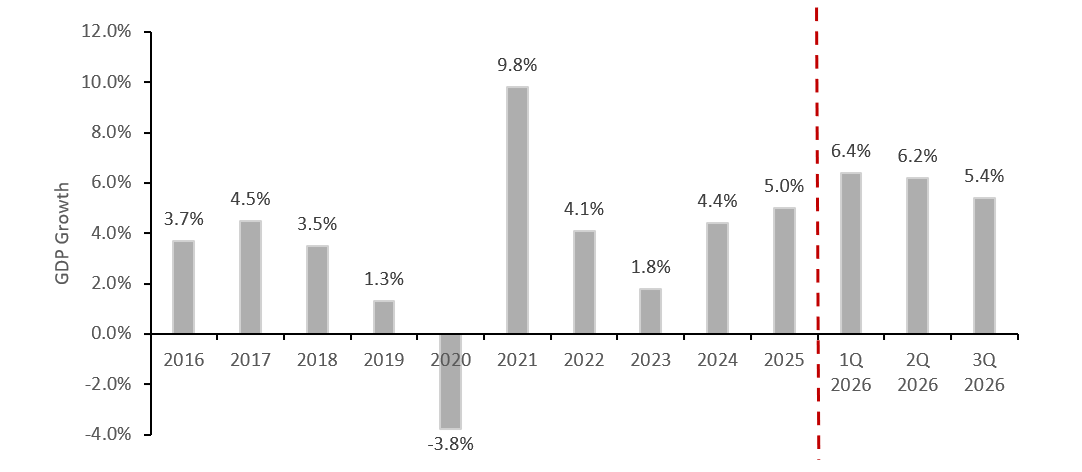
Singapore’s economy grew by 5.4% year-on-year (y-o-y) in 3Q 2026, moderating from the 6.2% recorded in the previous quarter. This quarter’s expansion was supported by strong growth in the construction and manufacturing sectors. Major infrastructure projects such as Changi Airport Terminal 5 contributed to construction activity. Whereas manufacturing growth was supported by robust global demand for AI-related products and electronics.
In August, the Ministry of Trade and Industry (MTI) raised Singapore’s 2026 GDP growth forecast to a range of 4.5% to 5.5%, an increase from the previous estimate of 2.0% to 4.0%. This adjustment reflects stronger-than-anticipated growth in the first half of the year and a more optimistic outlook for the rest of the year.
Chart 1: Singapore GDP y-o-y growth rate
From July to September 2026, the Purchasing Mangers’ Index (PMI) ranged from 51.4 to 51.7. This represents an increase from the previous quarter that showed an index between 50.7 and 51.3. This was primarily driven by the sudden rebound in global demand where overseas export business rose, resulting in manufacturing sector having a slightly more optimistic growth outlook despite geopolitical tensions.
Chart 2: Purchasing Manager Index
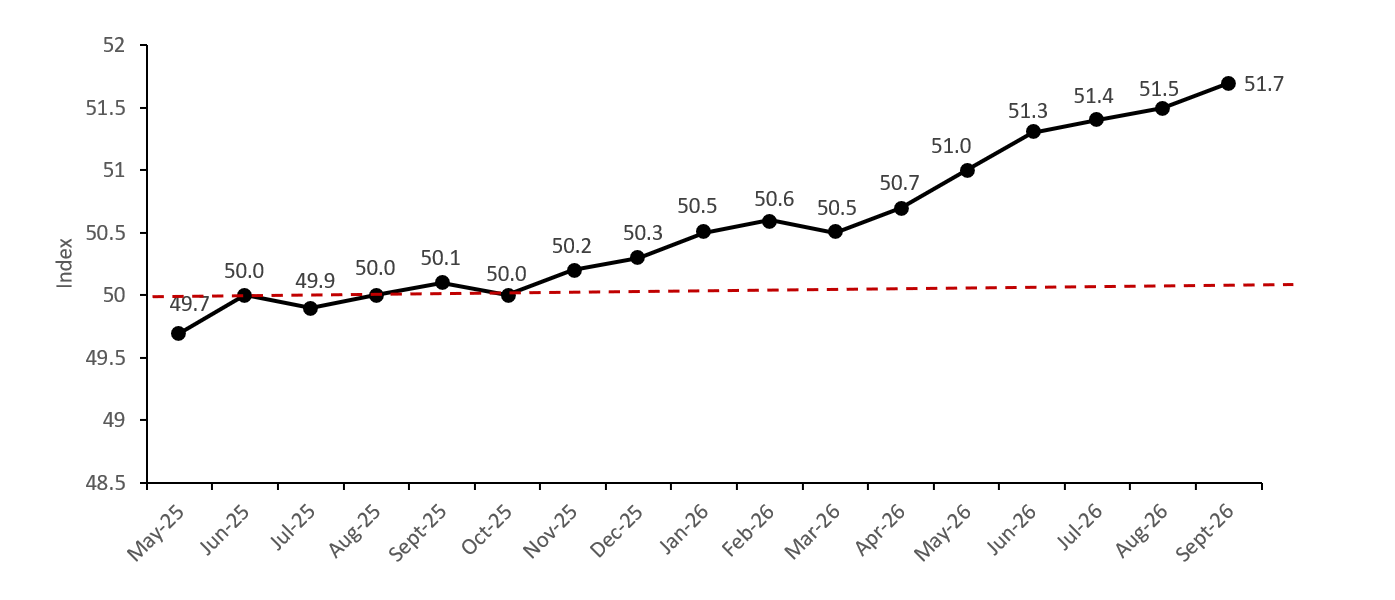
* A PMI score above 50 suggests that the manufacturing sector is expanding, while a score below 50 indicates decline. A score of exactly 50 means there is no change compared to the previous month.
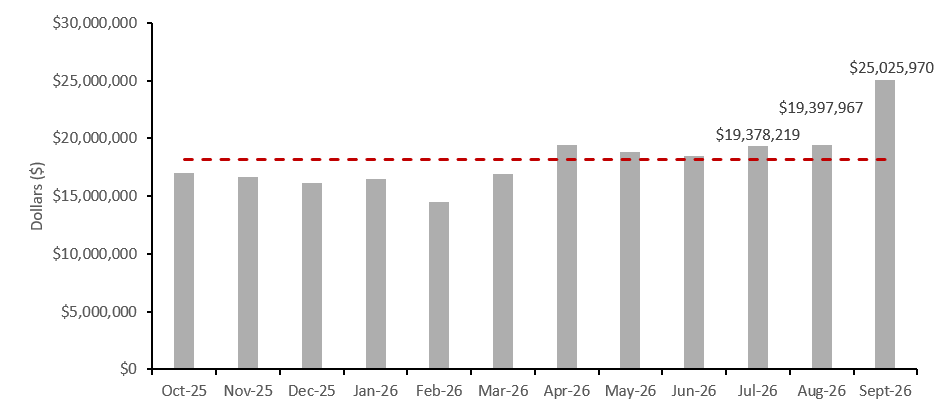
Other important manufacturing indicators such as Non-Oil Domestic Exports (NODX) and industrial production have also largely remained stable. The third quarter for NODX is seen with a slight increase as compared to the previous quarter, largely due to the 29% jump month-on-month, from August 2026 to September 2026. NODX continued to remain above recent averages, fueled by a massive global surge in artificial intelligence (AI) demand and strong performance in both electronics and non-electronics sectors.
Chart 3: Non-Oil Domestic Exports and Manufacturing Exports
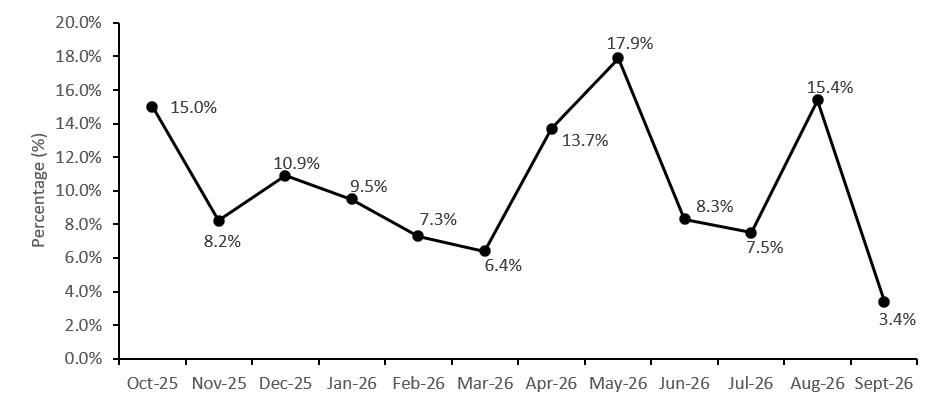
The index of Industrial Production expanded at a slower pace of 3.4% y-o-y in September compared to the other months in 3Q 2026. All sector reported healthy growth except for the chemical and biomedical engineering sector which recorded a decline of 4.6%, due to softer demand and feedstock supply disruptions in the petrochemicals production sector.
Chart 4: Index of Industrial Production y-o-y Change
Price and Transaction Volume
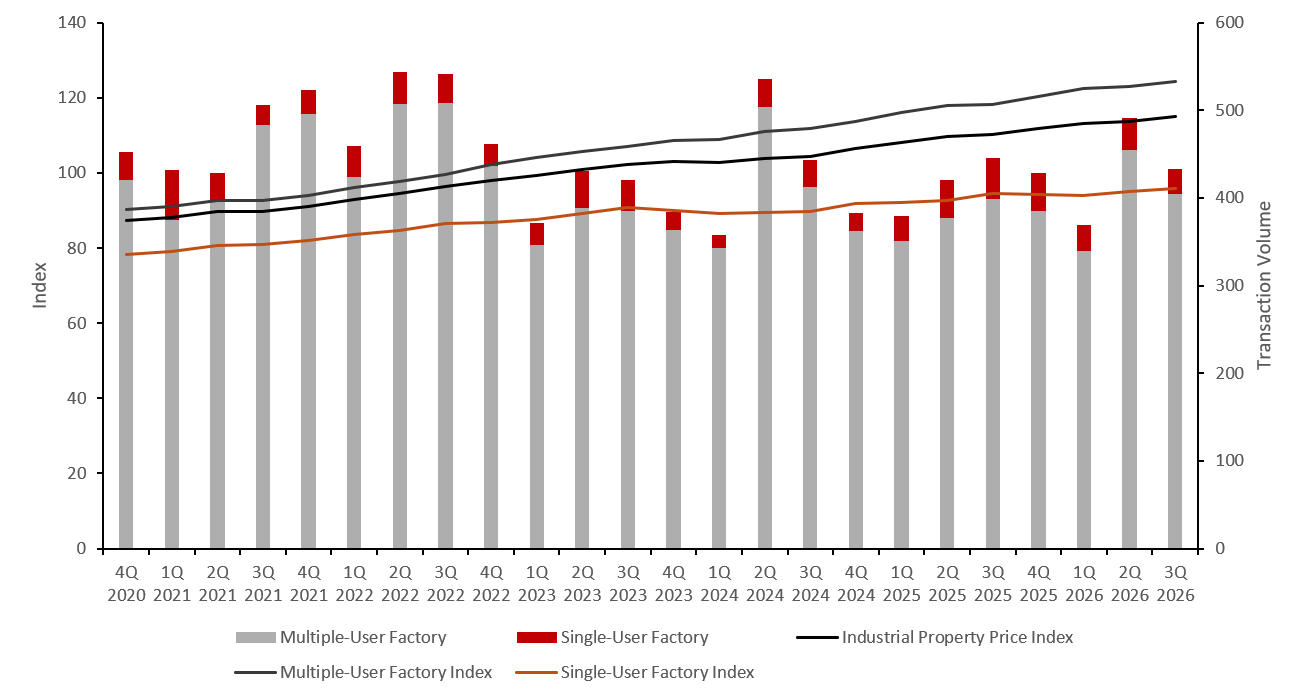
In 3Q 2026, the Industrial Property Price Index rose by 1% quarter-on-quarter (q-o-q), to 114.9, a faster pace than the 0.6% increase in 2Q 2026. This marks the ninth consecutive quarters of price increase, with the price index reaching a new record high, surpassing its previous peak recorded in 2Q 2026 at 113.8.
Growth was mainly driven by multiple-user factories, which rose 1.1% q-o-q, while the single-user factory index rose 0.8%. In the previous quarter, multiple-user factories rose 0.4%, while single-user factories rose 1.1%.
Transaction volume for both multiple-user and single-user factories fell by 11% and 22.2% respectively, reversing the uptick seen in both factory types in the previous quarter. This could be due to a price mismatch between buyers and sellers as the price index for industrial properties continues on its upward climb.
Chart 5: Price Index and Transaction Volume
In 3Q 2026, key industrial transactions include the $457.6 million sale of Loyang Offshore Supply Base at 25 ETC Loyang Crescent, as well as the $350 million sale of Advanced Display Park at 10 Tampines Industrial Avenue 3.
Other significant transactions include a multiple-user factory, located at 190 Yishun Avenue 7, sold for $88 million. Additionally, the sale of Standard Chartered @ Changi 2 and Senoko Industrial Estate were sold for $75.6 million and $35.1 million respectively.
Such large transactions underscore the sustained investor interest in industrial properties. The government plans to transform Jurong Island into an AI-ready infrastructure hub by 2050. Coupled with their continuous support for AI adoption initiatives, industrial assets, particularly specialised industrial facilities, have emerged as a key area of focus among investors.
Table 1: Top Five Sales Transactions in 3Q 2026, based on caveats lodged
Project Name | Address | Sale Date | Transacted Price ($) | Strata/Land Area (sqft) | Unit Price ($ psf) |
Loyang Offshore Supply Base | 25 Etc Loyang Crescent | 26 Aug 2026 | $457,557,966 | 3,569,167 | $128 |
Advanced Display Park | 10 Tampines Industrial Avenue 3 | 10 Sep 2026 | $350,000,000 | 997,340 | $351 |
N.A. | 190 Yishun Avenue 7 | 4 Sep 2026 | $88,000,000 | 368,484 | $239 |
Standard Chartered @ Changi 2 | 9 Changi Business Park Crescent | 27 Jul 2026 | $75,583,167 | 81,161 | $931 |
Senoko Industrial Estate | 7 Senoko South Road | 11 Sep 2026 | $35,100,000 | 109,724 | $320 |
Source: URA Realis as 2 November 2026, ERA Research and Market Intelligence
In 3Q 2026, 23 units of Gate+ and 7 units of Space 18 were sold in the new sale market, averaging $569 and $1,468 psf respectively. Launched in May 2026, Gate+ is a 33-year leasehold multi-occupancy factory located along Tukang Innovation Drive. Its appeal likely stems from its proximity to the upcoming Tukang MRT Station on the Jurong Region Line and easy access to the Ayer Rajah Expressway (AYE). Situated within the western industrial corridor, it offers convenient connectivity to major economic hubs like Jurong Lake District, Jurong Innovation District, and Tuas Mega Port.
On the other hand, Space 18, that is targeted to complete by the end of 2026, is a freehold clean industrial development located along Lorong Ampas road. Its appeal likely stems from its proximity to city-fringe as well as its rare freehold status.
In the same quarter, there are a total of 4 tenders closed, and awarded. The number of bidders ranges from 3 to 6 bidders, with Jalan Buroh seeing the highest tendered price of around $214.4 million.
Table 2: IGLS sites awarded in 3Q 2026
Site | Tender award date | Land area (sqm) | Zoning | Successful tender price | Unit price ($ psm) | No. of bidders |
Jalan Buroh | 17 July 2026 | 31,151.50 | B2 | $214,440,119 | $2,754 | 3 |
Kaki Bukit | 19 Aug 2026 | 7,364.80 | B2 | $52,788,000 | $2,867 | 6 |
6 Tuas Avenue 14 | 24 Sept 2026 | 8,380 | B2 | $6,800,000 | $580 | 3 |
5 Tuas Avenue 13 | 30 Sept 2026 | 17,422.4 | B2 | $43,388,000 | $1,779 | 5 |
Source: JTC as 2 November 2026, ERA Research and Market Intelligence
Rental Index
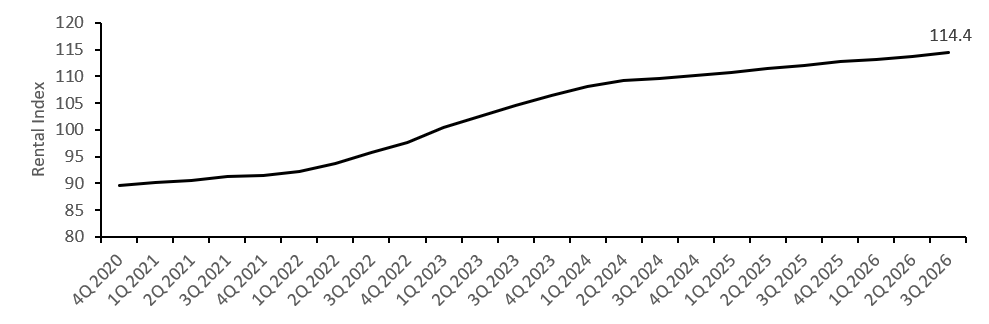
The All-Industrial Rental Index extended its growth streak to 23 consecutive quarters in 3Q 2026. Rents rose by 0.5% quarter-on-quarter, matching the increase recorded in 2Q 2026. This marks a second consecutive quarter of 0.5% growth and suggests that rental growth has stabilised at a modest pace.
Chart 6: Rental Index for All Industrial Properties
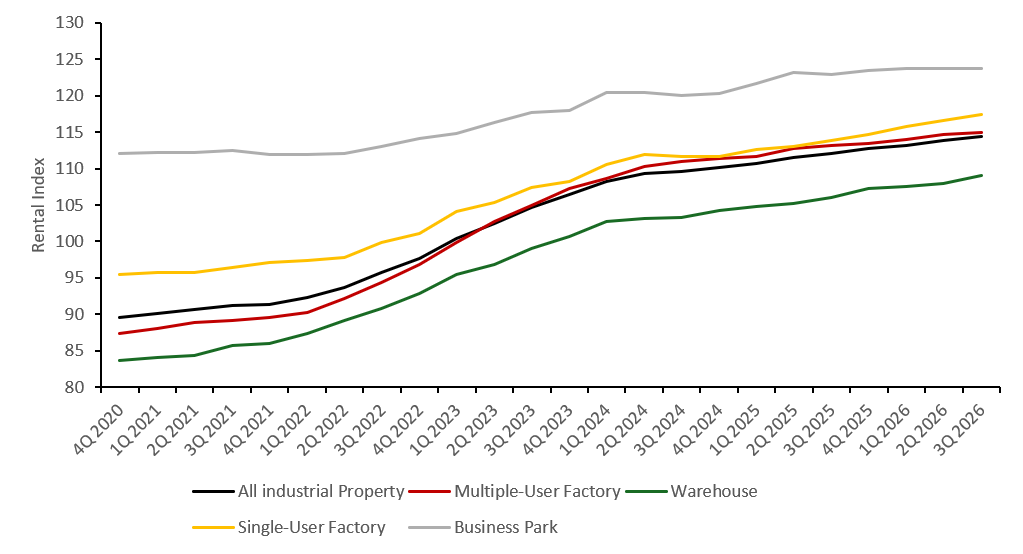
Warehouse rents post the fastest growth this quarter, up 1% q-o-q, an increase from the previous growth of 0.5% q-o-q in the previous quarter.
Multiple-user factory rents increased by 0.3% quarter-over-quarter, while single-user factory grew by 0.7%. On the other hand, business park grew by 0.1% this quarter reversing its slight decline of 0.1% in the 2nd quarter of 2026.
Industrial property rental growth is projected to stay mostly positive, especially due to the buoyant growth in artificial intelligence-related sectors which fuelled demand for Singapore industrial space in the third quarter.
Chart 7: Rental Index by Property Type
Occupancy Rates
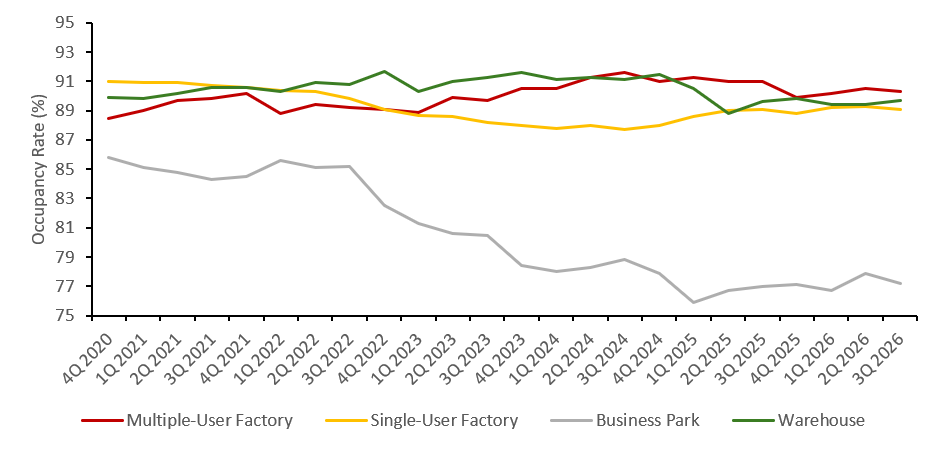
The industrial occupancy rate has fallen slightly from 89.1% in the second quarter to 88.9% in the third quarter of 2026. Nonetheless, the occupancy rates remain rather constant, staying between 88%-90% since Q3 2015.
Among the segments, warehouse occupancy saw the largest increase of 0.3 percentage points (ppts), reaching 89.7% after a stagnant growth in the previous quarter. Aside from warehouse, all occupancy rates for multiple/single user factory and business parks have fallen this quarter compared to the previous quarter. Multiple and Single user factory fell 0.2 ppts respectively, whereas business park fell the most at 0.9 ppts.
Overall occupancy stability indicates that demand for industrial space remain relatively steady in Q3 2026. This aligns with recent news regarding global and regional growth in semiconductors and AI-related supply chains, boosting the need for specialised and high-tech industrial and logistics space.
Chart 8: Industrial Properties Occupancy Rates
Upcoming Supply
In the third quarter of 2026, 13 industrial projects, with a total Gross Floor Area (GFA) of 365,350 sqm were completed. Larger area developments include a single-user factory at 2 Tampines Industrial Avenue 1 (233,220 sqm) and a multiple-user factory at 2 Tampines North Drive 4, Tampines Connection (46,090 sqm). Visionpower Semiconductor developed the multiple-user factory whereas SB (TND) Investment focuses on holding company in non-financial and insurance activities.
Looking into the last quarter of 2026, around 300,000 sqm of new industrial space could be completed in the last quarter of 2026. Single-user factories account for 56.1% of Q4 2026 supply, followed by warehouses at 43.7% and multi-user factories at 0.2%.
Such new completions would help to bolster occupier demand for industrial space, particularly since rental rates continue to rise across all industrial property types.
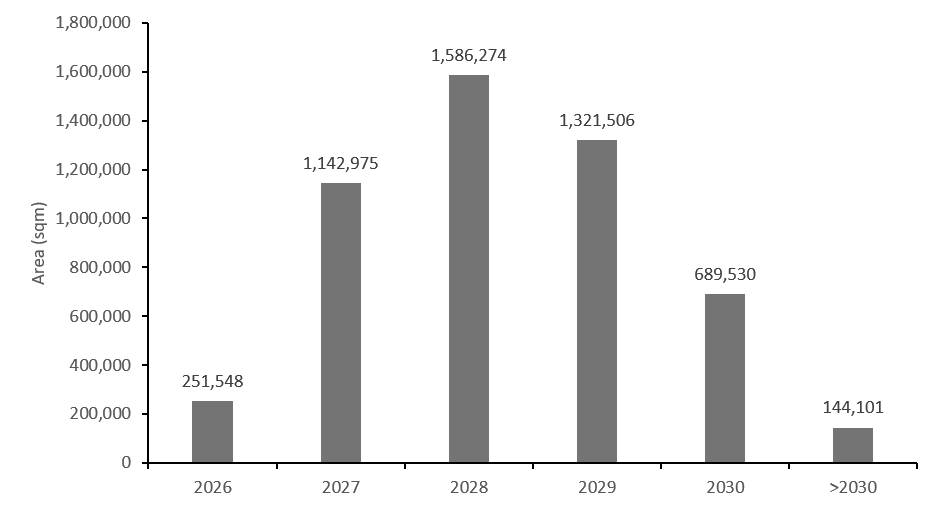
Chart 9: Upcoming Supply by Development Status and Expected Year of Completion
Conclusion
Singapore’s industrial property sector remains resilient even in the third quarter of 2026, driven by the demand in AI and electronics, together with the support of a resilient macroeconomic environment resulting in GDP growing by 5.4% year-on-year in 3Q 2026.
According to MTI, Singapore's manufacturing sector expanded by 7.5% year-on-year in 3Q 2026, moderating from the stronger 12.9% growth recorded in 2Q 2026. The slower pace of expansion was largely due to weaker performances in clusters such as biomedical manufacturing and chemicals. On a quarter-on-quarter seasonally adjusted basis, the sector contracted by 0.9%, reversing the 6.3% growth posted in the previous quarter. Despite this moderation, demand for industrial space remains supported by the growing need for AI-related infrastructure, which continues to underpin interest in specialised industrial facilities.
Looking ahead, Singapore’s economic growth prospects for the rest of 2026 is likely to remain healthy. With the increase in global AI-related investment as well as the support from the government, Singapore will remain to be an attractive location for foreign investors. Overall, industrial prices, rents and occupancy rates are projected to stay robust, support by an optimistic growth outlook.